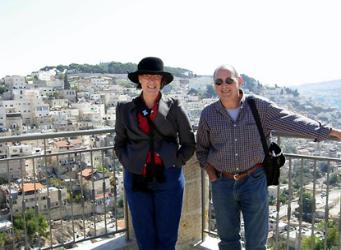
On October 30, my friend Roberta Ahmanson and our mutual friend and colleague Hillel Fradkin came to Jerusalem. Together we spent the better part of a week touring, shopping and enjoying great food, wine and conversations with some wonderful new Jerusalem friends. We were accompanied part of the time by Tom Rose-Haley, who, as in Egypt, kept an eye on our security situation.
Our first day together, thanks to Hillel’s connections, we went to an important City of David archeological site and were escorted by Dr. Eilat Mazar, “world authority on Jerusalem's past, [who] has taken King David out of the pages of the Bible and put him back into living history” (link below). Dr. Mazar, who first located the site of the historic remains by reading the Bible, continues to explore the enormous ruins and will publish her findings in 2009. For the full story about scholars who reject the Biblical account, and of how Dr. Mazar’s stunning work casts grave doubt on their theories, please see http://www.aish.com/jewishissues/jerusalem/Reclaiming_Biblical_Jerusalem.asp.
The next morning, we left Jerusalem early and drove north to the Golan Heights and Galilee. Here I discovered another contradiction between what some of us have heard on the news (how dangerous it is to visit the Golan Heights) and the reality (not a shot has been fired there since 1973). This was made clear to us as we stood on a tranquil, breezy hill and looked down on the rich farmland that continues to provide produce and dairy products for the entire country. Another important item from Golan is a spectrum of excellent, award-winning wines that are not only available in Israel but are now exported around the world.
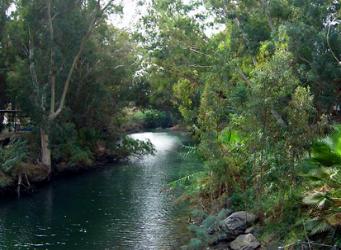
Later that day we saw the remains of Capernaum (pronounced Ca-per-NAY-hoom, not CaPURRneeum like they told us Sunday School) where most scholars agree that Jesus actually taught and ministered. Our guide, Ari David Ram, explained to us that Capernaum wasn’t a back water village in those days, but a thriving city on a trade route that would have given Jesus’ ministry wide exposure. It was here that He healed the Disciple Peter’s mother-in-law from her fever, taught in the synagogue and, on a hill not faraway, preached the Sermon on the Mount. We also visited a site along the River Jordan believed to be used for baptisms during Jesus’ lifetime. We drove through the West Bank on the way home, and stopped in the now-Arabic town of Cana, where Jesus turned water to wine.
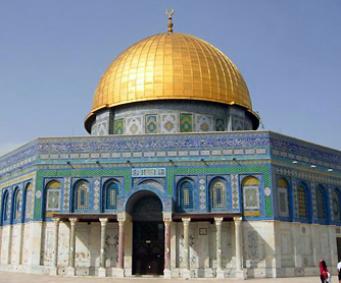
On other days, we visited the archeological dig under the Western Wall in the Old City of Jerusalem, where we were able to touch the wall that once protected the Holy of Holies in the Second Temple. We walked around the Temple Mount beside the Dome of the Rock and the al-Aqsa Mosque (we were not allowed to enter), saw the Mount of Olives and the Via Dolorosa, the Church of the Holy Sepulchre (Ari, our guide, really believes it is the site of the crucifixion and the resurrection), and the traditional site of the Ascension.
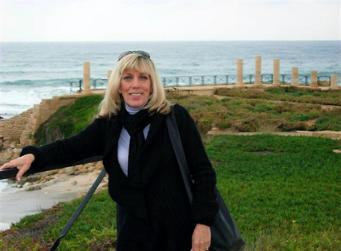
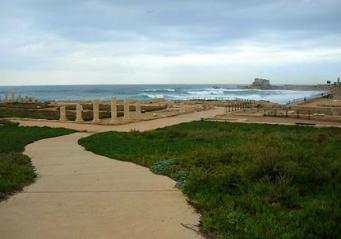
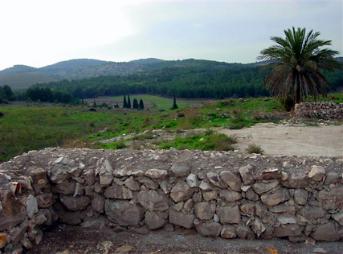
Our last day of touring, Roberta, Tom and I went to Megiddo which overlooks the Valley of Armageddon—a sleepy, peaceful place that seems to bear little resemblance to a future battleground. We walked through the remains of Caesarea, where Paul’s blinded eyes were once healed by Cornelius and where Paul later boarded a ship to Rome, ultimately to face his death. It was a stormy day, and the immense stone remnants of Herod the Great’s massive city-by-the-sea reigned sullenly over wild Mediterranean waters. That night, we ended our weeklong visit with yet another great dinner on Emek Refaim’s “restaurant row”—just a block from my apartment.
For me, the opportunity to share the places I love in Jerusalem with good friends, and to discover with them some of the most important sites in Biblical history, was sheer pleasure. As with all such times, it went too quickly. The memories, however, will be ours for a lifetime.