|
|
Home
|
|
|
|
|
|
|
|
 |
|
|
|
|
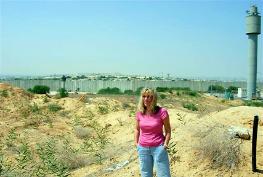
Hanging out in a bad neighborhood
|
|
|
|
|
|
 |
|
|
|
|
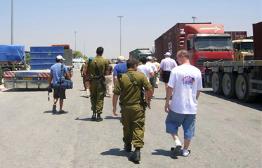
Inside the Karnei Checkpoint
between Gaza and Israel
|
|
|
|
|
 |
|
|
|
|
|
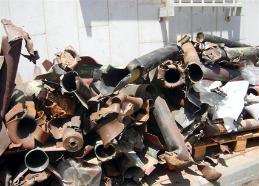
Kassams in Sderot
|
|
|
|
|
|
 |
|
|
|
|
|
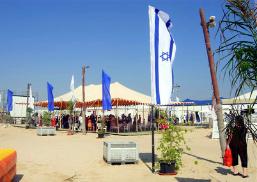
Tent city for refugees
|
|
|
|
|
 |
|
|
|
|
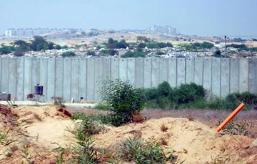
The Wall and Gaza City
|
|
|
Although some friends and family have expressed
concern for my safety because of the fighting in Gaza
and Lebanon, I am grateful to have arrived in Israel at
this time. There is always much to learn, but because of
the war the learning process is intensified. The
StandWithUs ( www.standwithus.com) group I'm
traveling with has done an outstanding job of
arranging for us to meet with Foreign Ministry
officials, Israeli Defense Forces officers, Knesset
advisors and experts on various aspects of the conflict—
academic, legal, military and media. These are trying
and dangerous days for all concerned but virtually
everyone here, at least, seems to understand that
"Peace" should not and cannot mean "Peace at any
Price."
On Thursday, August 3, we visited a site inside a
kibbutz that over looks the wall separating Israel from
Gaza City. IDF artillery was pounding away to our left
and we could hear a great deal of automatic gunfire in
Gaza City. From there we drove a few miles to the
Gaza border crossing at Karnei, where 200 trucks a
day bring supplies in to the Gazans from Israel. Pallets
of food and other necessities are unloaded into
warehouses. Once everything is inside, the doors on the
Israeli side are locked down and doors on the Gaza side
are opened. The shipments are loaded onto trucks and
transported around Gaza. Karnei costs millions of
dollars a week to operate and is armed to the teeth. It is
a fortress, as carefully guarded as a prison, with heavy
artillery firing close by and formidable surveillance
capabilities.
From Karnei we went to Sderot, the little civilian
community of 20,000 that serves as a primary target
for Palestinian Kassam rockets. Hundreds of them have
been collected, catalogued and piled up behind the
Sderot police station. Many of the rockets are full of
shrapnel that pierces metal, shatters glass and
mutilates human flesh. The attacks have continued
despite the Israeli disengagement from Gaza in August
2005. In June, one of the rockets hit near a nursery
school. Two people were killed, one of them a four-year-
old boy walking to school with his mother, who was
critically wounded. Ten others were also wounded.
Our last stop was at a seaside tent refugee city which is
large enough to house 6,000 evacuees from the north.
A wealthy Russian (with a shady reputation according
to some) put the whole thing together on a beach 24
hours after the war began. It is really astonishing and
looks, on the surface, like a festive beach campground.
But the conditions inside are not so vacation-like, with
300+ people sleeping in each tent, most them seriously
traumatized—especially the children. Some have lost
their homes or loved ones. The refugees are mostly low-
income Israelis but there are Lebanese and Arabs there
as well.
August 4, 2006